

Key Takeaways
If your lower back hurts when walking, it may be due to muscle fatigue, lumbar strain, degenerative changes in the spine, sciatica, or nerve compression, such as spinal stenosis. Effective solutions range from simple adjustments to stride and posture, and targeted stretches to advanced, nonsurgical treatments. This article explains why walking can trigger pain, offers practical fixes you can try today, and outlines when it’s time to see a specialist for more advanced care.
Table of Contents
Walking isn’t just something we do to get from A to B—it’s one of the easiest ways to get low-impact cardio and stay active. So when lower back pain makes each step a chore, it can sideline your routine and your day.
Whether pain is keeping you from your daily walk or simply making errands miserable, this article breaks down what might be causing it and what you can do about it.
We’ll cover the common reasons walking can trigger lower back pain—from muscle strain and nerve issues to posture and gait problems—and share practical tips on stretches, walking posture, and the red flags that mean it’s time to see a doctor.
How & Why Walking Can Trigger Lower Back Pain
The musculoskeletal system is a complex network of bones, muscles, tendons, ligaments, and joints that work in unison, and the spine is one of its most intricate parts. When you walk, your lower back (lumbar spine) acts as a bridge between your upper and lower body. If any part of this system is out of alignment, inflamed, or weak, the repetitive motion of walking can exacerbate the issue. For example, tight hip flexors can pull on the lumbar spine, while weak glutes can force the lower back muscles to overcompensate. This increased demand on the connective tissue and spinal structures turns a simple walk into a painful ordeal.
In addition to biomechanical issues, conditions such as degenerative disc disease, spinal stenosis, herniated discs, sacroiliac (SI) joint dysfunction, osteoarthritis, and osteoporosis can all cause pain that is worsened by walking. These conditions either compress nerves, reduce the cushioning between vertebrae, or cause joint inflammation—so the repeated loading and motion of walking amplify nerve irritation, joint compression, and connective‑tissue inflammation, producing more pain with each step.

Common Causes
The most common causes of lower back pain include muscle fatigue or strain, degenerative changes in the spine, and nerve compression, such as spinal stenosis.
If your lower back hurts when walking, it is rarely just one isolated issue. It is often a combination of factors affecting the spine. These factors and common causes include:
- Muscle Strain and Fatigue: Overuse or sudden movements can strain the muscles and ligaments supporting the spine.
- Degenerative Disc Disease: As we age, the discs that act as cushions between vertebrae can wear down, leading to pain that may actually feel better when changing position but worsens with prolonged repetitive motion.
- Lumbar Spinal Stenosis: A narrowing of the spinal canal can compress nerves, often causing pain that worsens with walking and improves with sitting or leaning forward.
- Sciatica: If the sciatic nerve is compressed, you may feel sharp, shooting pain radiating from the lower back down through the hips and legs with every step.
- Sacroiliac (SI) Joint Dysfunction: The SI joints connect the spine to the pelvis. If these are inflamed or moving too much (or too little), walking can become excruciating.
- Herniated or bulging disc: Disc material pressing on nearby nerves can cause pain that worsens with walking.
- Facet joint arthritis (facet arthropathy): Degeneration or inflammation of the small posterior spinal joints can cause localized back pain, especially with extension.
- Spondylolisthesis: Forward slippage of one vertebra on another can destabilize the spine and increase pain during activity.
- Compression fractures/osteoporosis-related fractures: Especially in older adults, fractures can cause persistent pain with weight-bearing.
- Hip or knee pathology (referred pain): Problems in adjacent joints can alter gait and overload the lower back.
Signs Walking Form Might Be The Issue
If you find yourself looking down at your feet, slouching forward, or taking overly long strides, your walking mechanics are likely contributing to your back pain.
Sometimes, your back’s structure is fine, but the way you move is the problem. Your gait (walking style) plays a massive role in spinal health. Signs that your form is the culprit include:
- Looking Down: Constantly looking at your feet or phone shifts your head forward, straining the neck and upper back, and eventually affecting the lower back.
- Over-striding: Taking steps that are too long can feel powerful–like you’re getting a good workout–but can actually destabilize your pelvis and put a twisting “torque” on your lower back, throwing your whole musculoskeletal system off.
- Slumping or Slouching: Rounding the shoulders collapses the chest and throws your spine out of alignment, forcing your back muscles to work harder just to keep you upright.
- Anterior Pelvic Tilt: This is a common postural condition where your pelvis rotates forward, causing your lower back to arch excessively (sometimes called “swayback”) and your bottom to stick out. This alignment directly compresses your lumbar facet joints, which can lead to persistent lower back pain. It often stems from tight hip flexors and weak core and glute muscles, and is a posture frequently observed during pregnancy that can sometimes linger long after without conscious awareness.
Simple Stretches
Gentle movements that loosen the hamstrings and hip flexors are crucial for alleviating tension in your lower back. Dynamic stretches can help prepare your body and prevent pain before your walk, while tension-release and flexibility stretches can be done after your walk.

Before Walks: Dynamic Stretches
1. Hamstring Scoop: Stand upright, step one leg slightly forward with only the heel on the ground, and toes pointed up. Hinge at your hips, keeping the front leg straight (a slight bend is okay!), and “scoop” your arms down towards your front foot. As you stand back up, bring your arms overhead, then switch legs and repeat, alternating sides as you walk forward or stand in place. Focus on pushing your hips backward, not just bending over, to maximize the stretch. Check out this video from Runner’s World for how to do hamstring scoops.
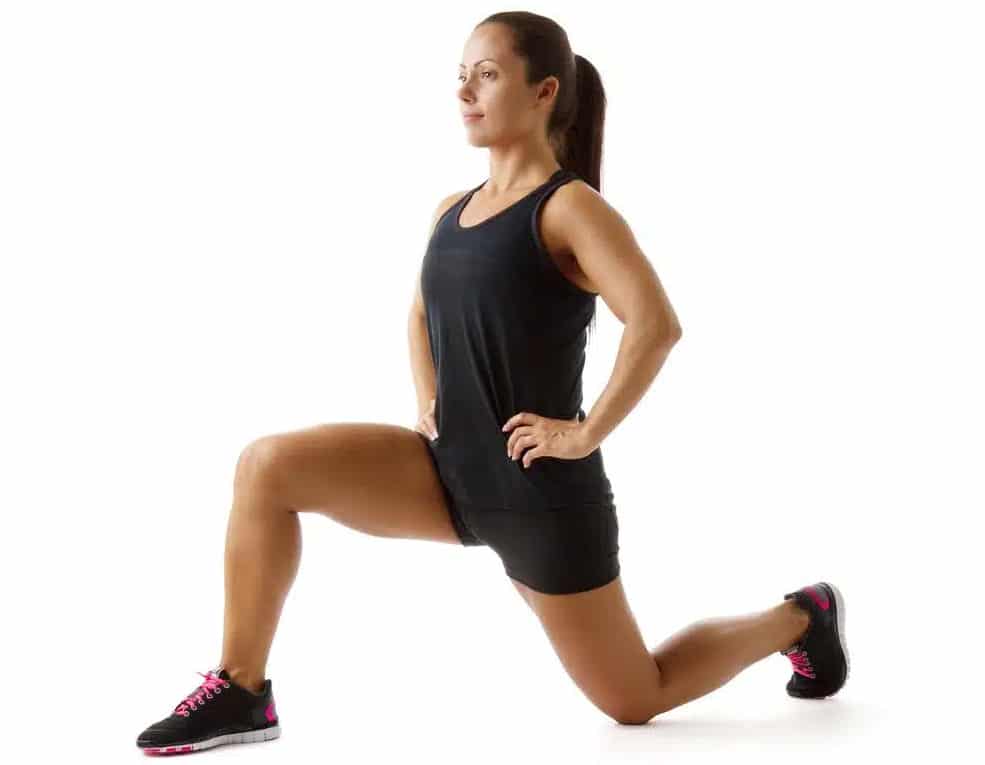
2. Dynamic Hip Flexor Lunge: Start in a lunge position with one knee on the ground (use a cushion if needed) and the other foot flat on the floor in front of you. Gently shift your weight forward and back, feeling the stretch in the front of the hip of the kneeling leg. Perform 5-8 gentle repetitions, then switch legs. This helps mobilize the hip flexors that can often pull on the lumbar spine.

After Walks: Static Stretches & Cool-Down
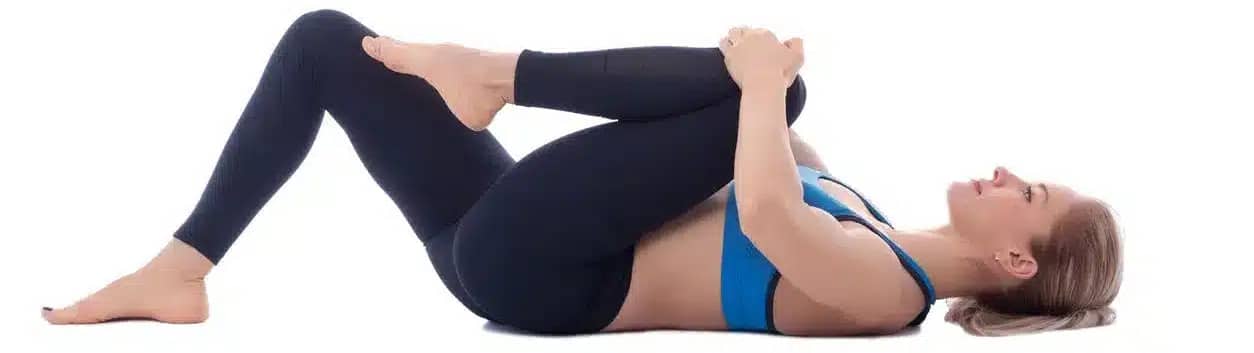
1. Knee-to-Chest Stretch: Lie on your back with knees bent. Gently pull one knee toward your chest using your hands. Hold for several deep breaths in and out (20-30 seconds), then release and switch legs. Repeat with both knees to your chest for another 20-30 seconds to further decompress the lower spine.
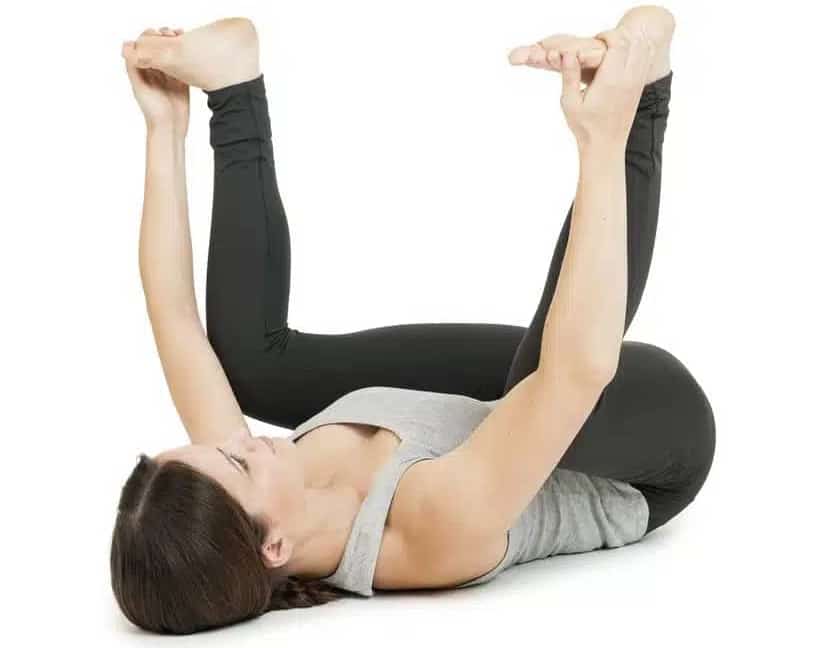
2. Happy Baby Pose (Ananda Balasana): Lie on your back and bring your knees towards your chest. Grab the outside edges of your feet with your hands, keeping your knees bent and directly over your ankles. Gently pull your knees down towards your armpits, keeping your lower back pressed into the floor. Hold for 30 seconds to allow a gentle opening in the hips and a stretch in the lower back.
3. Supine Spinal Twist: Lie on your back with your knees bent and feet flat. Let both knees fall gently to one side, keeping your shoulders flat on the floor. You can extend the opposite arm out to the side and look over that shoulder for a deeper stretch. Hold for 20-30 seconds, then gently bring your knees back to center and repeat on the other side. This provides a gentle release for the lumbar spine.

4. Figure-Four Stretch (Piriformis Stretch): Lie on your back with knees bent and feet flat. Cross your right ankle over your left knee. Gently pull your left thigh towards your chest, either by holding behind your left thigh or on top of your left shin. You should feel a stretch in your right glute and hip. Hold for 20-30 seconds, then switch sides. This helps release a tight piriformis muscle, which can contribute to sciatica and lower back pain.

How to Improve Walking Posture
An improved walking posture includes keeping your head up with your eyes forward, engaging your core slightly, and landing softly from heel to toe.
Correcting your walking posture can provide immediate relief and is a key step in preventing pain going forward. To improve your walking posture, be sure to:
- Engage Your Core: Imagine gently pulling your belly button toward your spine—not necessarily “sucking it in,” but more like a subtle brace or a “gentle hug” between your belly button and your spine. This activates your abdominal muscles to support your spine better.
- Keep Your Head Up, Eyes Forward: Look about 10–20 feet ahead of you. This helps keep your cervical spine aligned and your neck relaxed.
- Relax Your Shoulders: Let your arms swing naturally from your shoulders, not just your elbows. If you need help loosening up, do a few shoulder rolls or arm swings before you start your walk.
- Land Softly: Roll from heel to toe rather than stomping flat-footed, which sends shockwaves up the bones of your leg and into your spine. Consistent core engagement (as mentioned in the first tip) also helps with a softer landing by reducing the feeling of “dumping” your weight into your landing foot.
If you need assistance correcting your posture or examining your stride, consider professional gait training (yes, there is an entire specialty dedicated to your gait—that’s how important it is!). A gait analysis by a certified physical therapist can be immensely helpful in identifying muscle imbalances, correcting stride length, and reducing the impact on your lower back.

When to Stop Walking and See a Doctor
If your pain is ongoing and doesn’t improve with changes to your posture, stretching, or home remedies, it’s time to see a doctor. You should seek medical attention immediately if your pain is accompanied by leg weakness, numbness, tingling, or loss of bladder/bowel control.
If simple posture changes, stretching, and home care aren’t helping, don’t wait. When ongoing pain limits your activity, disrupts your sleep, or interferes with daily life, it’s time to see a specialist—like our back pain experts at AIM—for a thorough evaluation.
At AIM, we begin with a comprehensive diagnostic workup—detailed history, physical exam, imaging when appropriate, and nerve testing if needed—to pinpoint the root cause of your pain. With an accurate diagnosis, many patients find relief with nonsurgical orthopedic and regenerative options, including targeted injections such as Sarapin to block pain and reduce inflammation, Prolozone therapy to promote tissue repair, Platelet-Rich Plasma (PRP) and Hemozone (PRP + ozone) to stimulate healing, prolotherapy to strengthen connective tissue, chiropractic care to restore alignment, and bone marrow-derived stem cell treatments where appropriate.

If your walking is limited by persistent back pain, reach out—early evaluation and a personalized, nonsurgical plan can often restore function and prevent larger problems down the road.
Tips to Prevent Pain During Daily Walks
Investing in high-quality, supportive footwear and making a few simple adjustments to how and where you walk—like taking shorter strides and choosing softer surfaces—can go a long way toward preventing pain.
Beyond optimizing your posture and incorporating daily stretches, integrating a few simple habits into your walking routine can significantly reduce strain and keep your lower back much happier.
- Wear Supportive Shoes: Footwear acts as the first line of shock absorption. Old, worn-out shoes transfer impact directly to your joints, offering little protection to your back.
- Walk on Softer Surfaces: If possible, choose dirt paths, grass, or a track over concrete or asphalt. Softer ground naturally reduces the impact of each step.
- Shorten Your Stride: Shorter, quicker steps are generally easier on the lower back than longer strides, which can over-rotate the pelvis and strain your lumbar region.
- Break It Up: Instead of one long 60-minute walk, try three 20-minute walks to give your back muscles time to recover. Remember to include your warm-up and post-walk stretches each time!
Walking with a dog? Make sure to keep a balanced posture: shoulders back, hips facing forward, and weight evenly distributed so the leash doesn’t pull your gait out of alignment. Switch the leash to the other hand periodically to prevent one-sided strain.

Subscribe for Expert Insights and Our Ebook
A Closer Look at Regenerative Medicine: Comparing Your Options Learn about treatment options like Platelet Rich Plasma (PRP), Prolozone Therapy, and Stem Cell Therapy.
What Ongoing Pain Could Mean
Persistent pain that doesn’t improve with rest or stretching often signals a structural problem like arthritis or a herniated disc that requires professional evaluation.
Persistent pain that doesn’t improve with rest, posture changes, or stretching often indicates a structural or chronic issue—common causes include arthritis, herniated discs, or chronic inflammation. If your lower back still hurts after correcting your posture and footwear, it’s a signal that a professional evaluation is needed to identify the root cause through targeted testing and imaging. Left untreated, ongoing pain can lead to compensatory injuries (knee, hip, or other joint problems) and reduce mobility; early diagnosis enables nonsurgical, root‑focused treatments that can restore function and prevent further damage.

Treating Lower Back Pain at AIM
At Atlanta Innovative Medicine, our goal is always to help our patients live a healthy, active life. When lower back pain keeps you from walking, it limits your freedom and jeopardizes your overall health. We regularly achieve pain relief at AIM through innovative, individualized nonsurgical approaches that help get our patients moving comfortably again.
Our expert team takes a different approach than most. We get to the source of illness and injury by providing compassionate care and using the most advanced technologies available to diagnose and treat back pain. Whether through regenerative medicine, physical therapy, or other targeted nonsurgical treatments, we ensure you get the comprehensive, holistic, and personalized care that leads to true healing.
Don’t let back pain sideline you. Book your complimentary consultation with our team today and take the first step toward pain-free walking.
Frequently Asked Questions
How do I stop my lower back from hurting when I walk?
To stop the pain, wear supportive shoes and walk with a neutral spine (avoid exaggerated arching). Engage your core and glutes to unload the lumbar spine, shorten your stride, and walk on softer surfaces when possible. Add a brief dynamic warm-up (hamstring scoops, hip flexor lunges) before walking and gentle stretches after. If pain persists or worsens, or is accompanied by more serious symptoms such as numbness or tingling, see a specialist right away.
Can sciatica cause lower back pain while walking?
Yes, sciatica is a common cause of pain while walking. It typically presents as a sharp, shooting pain that starts in the lower back and radiates down the buttock and into the leg, often worsening with repetitive motion, such as stepping.
What are the signs that my gait is causing my lower back pain?
If you look down at your feet, take overly long strides, or slump your shoulders while walking, your gait may be the issue. An anterior pelvic tilt (sticking your buttocks out) is another common gait issue that compresses the lower back joints.
What’s one stretch to try if my lower back hurts after walking?
The Knee-to-Chest stretch is highly effective. Lie on your back and gently pull one or both knees toward your chest to decompress the lower spine and stretch tight lower back muscles.
When should I stop walking and see a doctor for lower back pain?
At AIM, we recommend scheduling an evaluation if your lower back pain is persistent, limits your activity, or doesn’t improve with rest, gentle stretching, and basic home care. Our team will perform a targeted exam and diagnostic testing to identify the root cause and recommend nonsurgical treatment options.
Seek medical attention right away if the pain is accompanied by new leg weakness, numbness, or tingling, or if you experience loss of bladder or bowel control, as these are emergency symptoms.
What red flags matter with lower back pain during walking?
Red flags include pain radiating below the knee, sudden foot drop (difficulty lifting the front part of the foot), fever, or new/worsening pain after a recent fall or trauma. Also seek immediate care for loss of bowel or bladder control, saddle anesthesia (numbness around the groin), progressive or rapidly worsening leg weakness, unexplained weight loss, a history of cancer or immune suppression, or severe night pain that wakes you from sleep.
What does ongoing lower back pain when walking usually mean?
Ongoing lower back pain when walking typically signals an underlying structural or functional issue—common causes include degenerative disc disease, spinal stenosis, herniated discs, sacroiliac joint dysfunction, arthritis, or chronic muscle imbalances and connective‑tissue inflammation. Persistent symptoms deserve professional evaluation so treatment can address their root cause.

About the Author
Dr. Farhan Malik is board certified in Family Medicine and Sports Medicine. He completed his sports medicine fellowship at the University of Nevada-Las Vegas. He currently provides nonsurgical orthopedic care for acute and chronic issues. He is a consulting physician for the Georgia Athletic and Entertainment commission, covering boxing and mixed martial arts events. He served as a ringside physician for UFC 145 in Atlanta.
Quizzes
Are you a candidate for Regenerative Medicine?
Regenerative medicine can be an effective therapy and treatment option for lasting pain relief for a variety of conditions like osteoarthritis of the knee, hip or shoulder; ACL or meniscus tears; tennis or golfer’s elbow; chronic neck and back pain; and more.
Is it right for you and your condition? Take 1 minute to answer a few “yes or no” questions that help to assess if you might be a candidate for PRP, stem cell or other nonsurgical regenerative treatments.
Are You a Stem Cell Candidate for Your Joint or Spine Damage?
Are you a candidate for Platelet Rich Plasma (PRP) Therapy?
Do I have nonsurgical options for my injured or aging joints?
Take the Pain Medications Risk Quiz


All content of this page is for informational purposes only and is not intended to serve as a substitute for the consultation, diagnosis, and/or medical treatment of a qualified physician or healthcare provider. Individual results may vary. Your medical professional can explain all the risks and potential benefits of any therapy based on your specific circumstances. At this time regenerative therapies are not FDA approved. Neither Atlanta Innovative Medicine nor its physician affiliates promise regenerative therapies as a cure for any condition, disease, or injury.
Other Atlanta Areas We Service:
© 2024 Atlanta Innovative Medicine, LLC. All Rights Reserved. AIM Scholarship Opportunity